Source Landscape Garden Artificial Grass for Sport Recreation Landscaping
Compare 27 landscape garden artificial grass options from verified Chinese manufacturers. Buyers can evaluate specifications like yarn density, height, and certifications including ISO9001 and CE for sport, recreation, and landscaping applications; compare the available evidence and request quotations based on your requirements.
Key considerations
Products List




Comprehensive Sourcing Guide
Landscape Garden Artificial Grass Sourcing Guide
Sourcing landscape garden artificial grass for B2B distribution or project installation requires a disciplined approach that balances product performance, compliance documentation, and commercial terms. The listings observed in this category are concentrated among manufacturers in Hebei and Jiangsu, China, offering roll-based supply in standard widths and lengths, with customization available across density, pile height, yarn form, and color. This guide is written for procurement teams, landscapers, and distributors who need to translate supplier listing data into verified purchase decisions rather than accepting marketing descriptions at face value.
Because artificial grass is a durable, semi-permanent surface, errors in specification become expensive after installation. A turf that looks acceptable in a sample photo may fail in UV stability, drainage behavior, or seam integrity within a season. The sections below organize the sourcing process into seven decision areas: product scope, technical verification, compliance, cost, supplier qualification, and long-term checks. Use each section as a checklist item before committing to a supplier, and treat every listed attribute—such as density, coating, or certification marks—as a claim to be confirmed with documentation, samples, and contract terms rather than assumed.
Product Scope and Observed Listing Signals
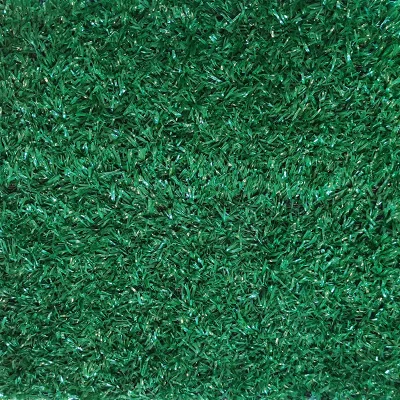
The observed listings cover landscape grass, sport grass, and general artificial grass, with occasion tags spanning recreation, landscaping, and sport use. For garden and landscape applications, the relevant variants are those tagged for recreation and landscaping, typically featuring monofilament yarn in lime green, pile heights of 30mm and 35mm, and densities ranging from 15,750 to 16,800 tufts per square meter. Materials are PP and PE, and yarn forms include straight cut, curving, and curl combinations, with both arc-type and flat-type cross profiles listed. Roll standards of 4m×25m or 2m×25m dominate the listings.
Standard products carry model identifiers such as SUNQ-HY00054, SUNQ-AL00088, and QDS-UB30, which is useful when comparing quotations, since identical-looking turf can differ significantly in spec. Customization is listed as available, so buyers with non-standard width, color, or density requirements should treat listed models as a baseline rather than a limit. Note that attributes vary between listings—one product lists a flat-type cross profile and 3/8-inch row spacing, another an arc type at 3/4 inch—so a side-by-side spec table per shortlisted model is the practical way to avoid conflating features across the 27 observed products.
Technical Specifications to Verify
Start with yarn and construction parameters, since these determine both appearance and lifespan. Verify fiber shape (monofilament), yarn form (straight cut versus curving or curl), filament dtex—the listings show 10,000 Dtex—and the cross profile, which affects resilience and how the blades recover after foot traffic. Confirm row spacing (3/8 inch and 3/4 inch appear in the observed range), tuft density in tufts per square meter, and whether the product is a without-sand type, which affects infill planning and installation cost. Pile height of 30mm or 35mm should match the intended use intensity.
Backing and finishing parameters deserve equal scrutiny. Ask which ground cloth construction is used (complex backing is listed), confirm the base is suitable for cement base installation, and verify the coating—BSF latex appears in the listings—for drainage-hole pattern and bonding strength. Request yarn length class confirmation (long and medium are both listed), and always order physical samples to assess touch feeling, which suppliers describe as comfortable, natural, or durable. A sample also lets you check color consistency between batches, edge finishing, and whether the roll weight and dimensions match the stated 4×25m or 2×25m standard before container loading.
Compliance and Safety Documentation
Certification claims in this category are extensive but must be verified individually. Listings reference ISO9001, CE, RoHS, OHSAS, SGS, and Fama, and one listing separately cites CE, SGS, TUV, anti-fire, anti-UV, and chromium test reports. For European distribution, confirm which CE pathway applies, whether the certificate is current, and whether it names the exact product model you are buying rather than a similar variant. A certificate that does not reference your model number is effectively decorative. Ask for the issuing body's report number so you can validate it independently.
Quality attributes such as anti-UV, unleaded, fireproof, and waterproof are listed as product qualities, but buyers should request the underlying test reports rather than accepting the adjectives. For fire performance, ask which test method and classification the product was assessed against and obtain the report itself. RoHS and lead-free claims matter especially for installations used by children or in public spaces. Build document delivery into the payment terms: certificates, test reports, and material declarations should be received and verified before deposit release, and re-confirmed for each production batch if you are running repeat orders across seasons.
Cost Drivers and Commercial Terms
Observed prices in the category range from roughly USD 0.2 to 10, with MOQs from 1 to 5,000—wide spreads that reflect differences in density, pile height, yarn grade, and order format. The main cost drivers are tuft density (15,750 versus 16,800 tufts/sqm), dtex weight, pile height, backing complexity, and coating type. Higher density and heavier yarn raise both material cost and roll weight, which in turn increases freight. Customization—special widths, colors, or densities—typically moves pricing away from listed catalog levels, so obtain a written quotation tied to a full spec sheet, not a model number alone.
Commercial terms to settle early include Incoterms, packaging (PP woven bag, in-roll), and MOQ flexibility for trial orders. The 1-unit MOQ entries suggest some suppliers accommodate sample or small trial quantities, but confirm whether trial pricing differs from volume pricing and whether the same spec is actually produced at both tiers. Ask how pricing behaves at different annual volumes, whether prices are quoted per square meter or per roll, and what validity period applies. For repeat programs, negotiate a price-adjustment mechanism linked to raw material movement rather than absorbing unilateral increases mid-season.
Supplier Qualification and Quality Control
Qualify suppliers on manufacturing capability, not just listing polish. Both Hebei and Jiangsu origins appear in the listings, and location affects logistics cost and lead time to your port, so factor origin into landed-cost comparisons. Ask for factory evidence: production photos or video, machinery lists, and whether the supplier holds ISO9001-claimed quality management in practice, with audit reports available. Verify whether the supplier is a manufacturer or a trader, since direct production typically offers better control over customization and batch consistency, especially for landscape grass programs that span multiple container loads.
Quality control should be contractual, not assumed. Define inspection points: pre-production sample approval, during-production checks on density and color, and pre-shipment inspection covering dimensions, weight, tufting, backing, and packaging. Decide whether you will use a third-party inspection service and at what AQL level, and state this in the purchase contract. Because one listing advertises "good aftersale service," ask concretely what that means: response time for claims, replacement policy for defective rolls, and whether color-matching guarantees extend to subsequent orders. Suppliers unable to articulate these mechanics should be treated as higher risk regardless of listed certifications.
Long-Term Procurement Checks
Artificial grass is judged over years, so long-term verification matters more than the day-one sample. One observed listing states a warranty of 5–8 years—clarify precisely what the warranty covers (UV degradation, backing delamination, tuft loss) and what voids it, and get the warranty in writing with a defined claims process. Check the main market claims—Europe, Russia, Latin America, Africa, and Asia are listed—because a supplier with established export history to your region will better understand local compliance expectations and shipping requirements. Request references from buyers running comparable landscape programs.
Plan procurement as a rolling program rather than one-off purchases. Freeze your technical specification in a document the supplier signs, so batch-to-batch drift in density, color, or coating is a breach rather than a debate. Re-test incoming batches periodically against the approved sample, particularly color and weight, and monitor field performance on installed sites for flattening, seam integrity, and drainage. Maintain dual-supplier capability if volume justifies it, since a single production line issue can stall an installation season. Finally, review specification updates annually: yarn technology, backing systems, and compliance requirements in this category evolve, and buyers who re-benchmark specs keep both cost and quality competitive.
FAQs
What certifications are available for landscape garden artificial grass?
Certifications include ISO9001, CE, RoHS, OHSAS, SGS, and Fama. These documents verify quality and safety standards for international trade. Buyers should request specific certificates to ensure compliance with local regulations and industry requirements for landscaping projects.
Can landscape garden artificial grass be customized for specific projects?
Yes, customization is available for various landscaping needs. Manufacturers offer options for different yarn forms, densities, and colors like lime green. Buyers can specify requirements for recreation or sport use to ensure the product meets their exact design and functional expectations.
What is the typical density for landscape garden artificial grass?
Typical densities range from 15750 to 16800 tufts per square meter. This density provides a natural feel and durability for landscaping applications. Higher density options ensure better coverage and a more realistic appearance for garden and recreational areas.
Which materials are used in landscape garden artificial grass production?
Materials primarily include PP and PE for durability and safety. The grass features straight cut, curving, or curl yarn shapes with monofilament construction. These materials ensure the product is anti-UV, fireproof, and waterproof for long-term outdoor use.
What are the standard roll specifications for landscape garden artificial grass?
Standard rolls are typically 4 meters by 25 meters or 2 meters by 25 meters. These dimensions facilitate easy installation and transport for large landscaping projects. Buyers can choose based on their specific area requirements and installation preferences.
How long is the warranty for landscape garden artificial grass?
Warranties typically range from 5 to 8 years. This coverage ensures product durability against UV fading and wear. Buyers should verify warranty terms with suppliers to understand specific conditions and coverage details for their landscaping investment.